

Are you tired of being the designated doormat in your social circle? Do you find yourself constantly bending over backward to please others, even at the expense of your own well-being? If so, then you, my friend, are a classic people pleaser. But fear not, because I’m here to equip you with the tools and examples you need to break free from the chains of people pleasing, all while maintaining your witty charm and informative style.
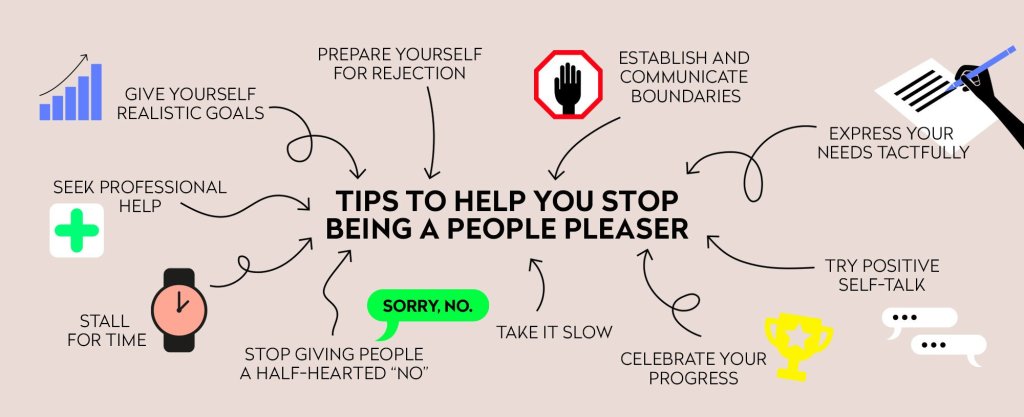
Let’s dive deeper into the power of “Let me get back to you.” Picture this: Your friend asks you to help them move on the same day you had planned a relaxing day at the beach. Instead of feeling pressured to say yes immediately, utilize the secret weapon of buying yourself some time. Respond with a witty yet polite “Let me check my schedule and get back to you.” This not only gives you the opportunity to assess your own priorities but also showcases your assertiveness and self-respect.
Now, let’s explore the science behind delaying decisions. Imagine you’re at a social gathering, and someone asks you to participate in an activity that you’re not entirely keen on. Instead of blurting out an immediate “yes” or “no,” take a momentary pause. Researchers at Columbia University discovered that even just 50 to 100 milliseconds of focused attention can lead to better decision-making. So, embrace the silence, let your brain process the request, and respond with confidence and clarity.
If the idea of completely eliminating people pleasing from your life feels overwhelming, start small with low-risk situations. For example, your co-worker invites you to an after-work happy hour, but you’ve had a long day and would rather unwind at home. Practice flexing your assertiveness muscles by politely declining the invitation and suggesting an alternative plan, such as grabbing coffee together during lunch break another day. This allows you to set boundaries while still finding common ground and maintaining positive relationships.
Let’s discuss the power of language in asserting your boundaries. Instead of saying “I can’t” when declining an invitation or request, opt for the more definitive and empowering phrase of “I don’t.” For instance, if someone asks you to take on an additional project at work that you simply cannot handle, confidently state, “I don’t have the bandwidth to take on any more projects at the moment.” This phrasing establishes clear boundaries and showcases your self-assuredness, making it less likely for others to challenge your decision.
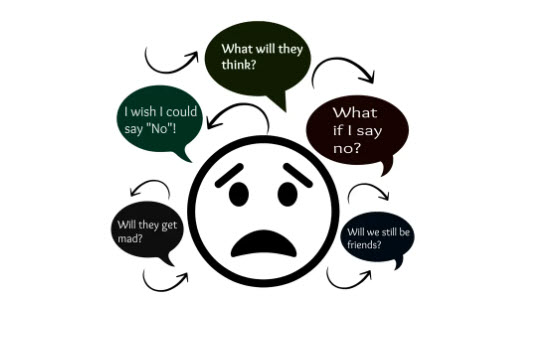
We’ve all experienced cringe-worthy moments where we desperately sought validation or cracked a joke that fell flat. But here’s the thing: you have the power to rewrite those stories. Reflect on those moments, focus on the lessons they taught you, and reframe them as catalysts for personal growth and resilience. Embrace the idea that setbacks and failures are stepping stones toward success, and let go of those cringe moments with a witty twist.
To confidently say no and prioritize your own goals, it’s crucial to have a clear vision of where you want to be in the future. Take the time to define your personal and professional aspirations, and use them as a compass to guide your decision-making process. Say yes to opportunities that align with your goals and contribute to your growth, while politely declining those that do not serve your long-term vision. Remember, saying no to others means saying yes to yourself and your dreams.
Now, let’s address the issue of toxic people who constantly drain your energy and manipulate you into pleasing them. Identify those individuals who consistently disregard your boundaries and prioritize their own needs above all else. Distance yourself from their negative influence and surround yourself with supportive, positive individuals who uplift and inspire you. Remember, you deserve to be surrounded by people who respect and appreciate your authentic self.
Here’s a fascinating fact to consider: studies show that people apologize unnecessarily as a way to seek validation and approval. Save those apologies for situations that genuinely warrant them, such as when you’ve hurt someone’s feelings or made a mistake that affected others. By reserving your apologies for meaningful occasions, your words will carry more weight and demonstrate your sincerity.
So there you have it, armed with these practical strategies and real-life examples, you now possess the knowledge and tools to break free from the clutches of people pleasing. Embrace your assertiveness, rewrite your narrative, set clear boundaries, clarify your goals, surround yourself with positivity, and save those apologies for when they truly matter. Now, go forth and conquer the world with your newfound assertiveness, wit, and charm! Remember, you’re not just a people pleaser, you’re a badass with boundaries!
 Caronleid