
What springs to your mind when you think of the word empathy? Do you believe that empathy is a gift and people are born with it? That’s a common misconception, although true in some cases. However, being empathetic is truly (like everything else we have learned so far in this book) a skill you can understand.
When you think of empathy, do you envision it as a mystical gift bestowed upon only a fortunate few? Well, let me debunk that myth! While some people may have a natural inclination towards empathy, it’s primarily a skill that can be cultivated and honed just like any other.
Becoming Empathic: The Core of Emotional Intelligence
Becoming empathic is about training your mind and exercising it to become more attuned to empathy. It is about shifting your mindset and training it until compassion becomes second nature to you. Empathy is one of the core concepts of becoming an individual with high emotional intelligence because:
- It further enhances your ability to relate to and understand those around you.
- It helps you better resolve conflicts and manage disagreements when you can empathize with others.
- It helps you accurately predict how others are going to react.
- It makes you more confident at expressing your point of view because you’re attuned to your surroundings.
- Others will view you as a source of comfort, sometimes even as someone who can heal them emotionally.
- It improves your motivation to become better and to thrive in any social setting.
- You form better and stronger bonds with the relationships that you forge, even the new ones.
- You will find it much easier to forgive others because you can see things from their perspective, reflect on why they react in a particular way, and understand where they’re coming from.
- It makes you more aware of your non-verbal body language and the way you come across to others.
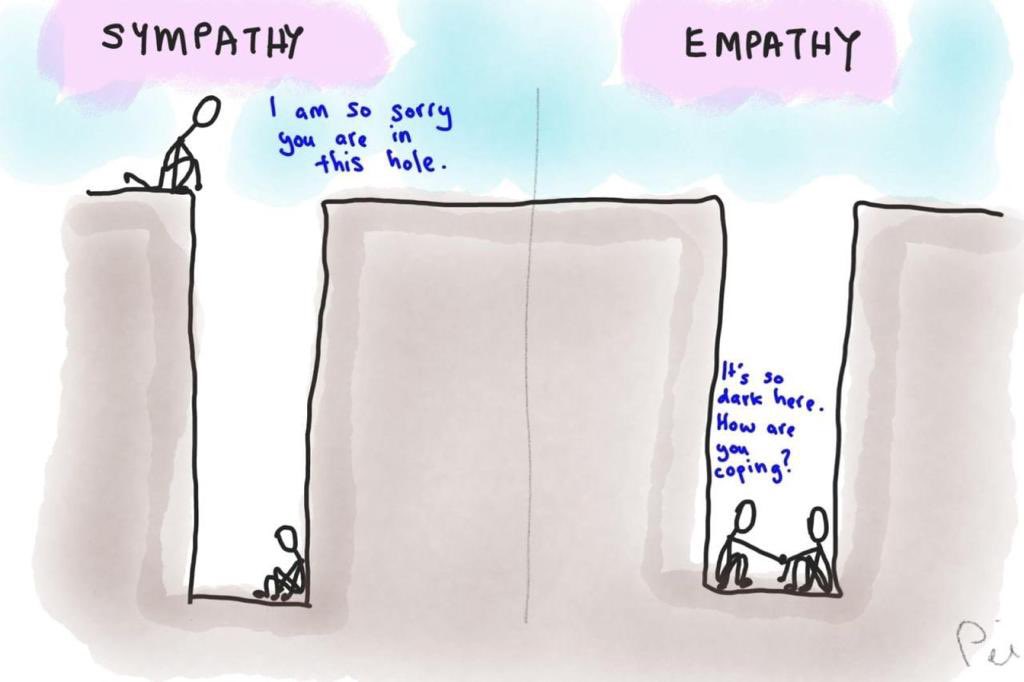
Many people think they’re empathetic when, in reality, they’re practicing sympathy. So, what’s the difference?
Sympathy involves feeling sorry for someone’s situation without necessarily understanding or experiencing their emotions. It’s like witnessing a friend’s heartbreak and saying, “I’m sorry you’re going through this.” Sympathy is compassionate, but it lacks the deep emotional connection that empathy offers.
Empathy, on the other hand, is the genuine ability to connect with another person’s feelings. It’s akin to saying, “I understand how you feel because I’ve been there too.” When you’re empathetic, you share in their joy, pain, or frustration, which helps the other person feel truly seen and understood.
The Empathetic Journey Begins!
Since empathy is one of the core elements of emotional intelligence, it is only fitting that we do what we must towards building our empath abilities. Do you want to become an empath? Start with these strategies:
- Connect with yourself: Before you can begin to understand, you must first connect with yourself. An effective empath is someone who is centered, someone who is down-to-earth and grounded. When you are connected with yourself, you’re less likely to become easily distracted by what’s going on around you. Meditation is the best way to connect with yourself.
Meditation helps you find balance, calm, and inner peace, and it can be utilized in almost every aspect of your life whenever you feel anxious, worried, or stressed. The hardest thing is learning to control our minds. But to become an empath, this is what is needed. It’s easy to let our thoughts and emotions get the best of us. It is so easy to be consumed by negativity. Learning to become an empath begins within you, and you start by learning how to focus and gain control of what’s happening internally.
Another method you could use to connect with yourself is to spend a few minutes every day just being in your own company. We live in a far too attached society to our technological devices, and it is time we ditched them for a bit. You’ll never connect with yourself if your eyes are constantly glued to a digital screen. Pause, take a breath, slow down, and appreciate being with yourself. This can be done along with your meditation sessions.
Take time to reflect on what matters to you, and more importantly, take a few minutes to clear your head and think.
- Putting Yourself in Their Shoes: This is perhaps the most obvious thing you can do, but it works. Whenever you’re involved in a conversation with someone, always picture what it would be like to see things from their perspective, not just yours. This is one of the best ways to grow your empathy skills. We may not realize it. However, we rarely give proper thought to what someone else might be going through. We may listen to what they’re telling us, and we may sympathize, but how often do we attempt to feel what they’re currently dealing with?
You may have been guilty in the past of brushing someone off as just being silly, or dramatic, or exaggerating way too much. That’s what happens when we lack the necessary empathy skills to respond appropriately. It may be stupid or dramatic to us, but it could be a grave matter to them. Being an empath will teach you to see beyond your feelings and connect to someone else without prejudice or judgment.
- Give More Thought to Them: When you’re eating that delicious lunch you just bought from the store nearby, do you think about the people who worked hard to prepare it for you? When you’re enjoying your delicious cup of coffee at the local coffee shop, do you think about the ones who went through all that trouble to gather the coffee beans that you’re enjoying so much? Giving people around you more profound thought is an approach you could use to begin training your empathy skills. People don’t have to be in front of you to make the connection. It is about taking a moment to think about these people and silently offering them a quick thank you. It is about connecting with humanity.
- Eliminate Prejudices: This can be a tough one. A lot of us carry prejudice without even realizing it. For some, prejudice is already an innate part of who they are. When someone of a different race, gender, or religion approaches you, how do you react if it is something you’re unfamiliar with? Do you automatically set up a barrier? That is what prejudice is, and it may prevent you from becoming an empath if you don’t work to get rid of it. To become an empath, you will have to challenge your prior beliefs and prejudices. Work to get rid of them and start to view people, places, and situations with an open mind. Just because a person is different from you doesn’t mean you should be wary: everyone is still human at the end of the day.
Get rid of the barriers and start viewing everyone as only one thing – human. We’re all equals on this earth, and we should mutually respect one another. To help you with this, try to find something with which you can connect on. Some common ground. This enables you to focus more on what makes you similar and less on what makes you different. When you can relate to them and connect on a shared interest, you’ll have a more excellent interactive experience, and eventually, boundaries will slip away. This is when greater empathy occurs: opening up to the people around you and welcoming them as part of your circle.
The Empathetic Journey Begins!
Now that you have the blueprint to become an empathetic dynamo, remember that it’s a continuous journey of growth. Embracing empathy is not just about understanding emotions but also about caring, acting, and being there for others.
So, channel your inner superhero, don your empath cape, and set forth on this empowering journey. Make the world a more empathetic place—one understanding glance at a time!
 Caronleid