
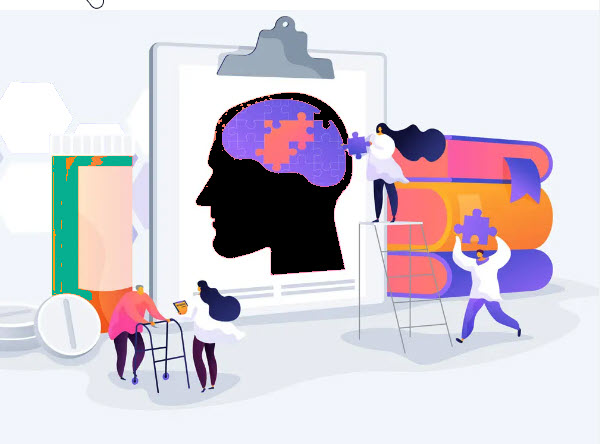
Dementia is a global concern affecting over 55 million people worldwide, with an annual cost of approximately $1.3 trillion. Among the various forms of dementia, Alzheimer’s disease stands out, impacting up to 70% of individuals facing this condition. While new treatments have shown promise, early diagnosis remains a significant challenge, as initial symptoms are often brushed off as typical signs of aging.
However, a recent study has made strides in this regard, unveiling a deep learning framework designed to assess the risk of transitioning from mild cognitive impairment to Alzheimer’s disease.
The Growing Dementia Challenge
In 2019, around 57.4 million people worldwide were grappling with dementia. The Global Burden of Diseases, Injuries, and Risk Factors Study predicts that this number will surge to over 150 million by 2050. Unfortunately, most of these individuals will ultimately battle Alzheimer’s disease, imposing substantial financial burdens on healthcare systems and families alike.
Until recently, available treatments primarily addressed symptoms but failed to slow or halt the disease’s progression. The emergence of new monoclonal antibody treatments, including lecanemab, aducanumab, and donanemab, brings newfound hope as the first disease-modifying therapies. These medications target and clear the amyloid plaques responsible for most Alzheimer’s symptoms, but their effectiveness hinges on early intervention—a major stumbling block given the current diagnostic methods.
Challenges in Early Diagnosis
At present, Alzheimer’s diagnosis typically relies on documenting cognitive decline, often occurring after substantial brain damage has already taken place. While certain biomarkers for Alzheimer’s, such as amyloid and tau proteins, can be detected in cerebrospinal fluid (CSF), this method is invasive and costly.
Promising research suggests these biomarkers could also appear in blood plasma, offering a less invasive diagnostic option. However, more work is needed before this approach becomes a clinical reality.
The Importance of Early Diagnosis
Dr. Emer MacSweeney, CEO and consultant neuroradiologist at Re:Cognition Health, underscores the significance of early diagnosis, particularly in light of recent breakthroughs in disease-modifying treatments. To fully leverage these advances, there’s an urgent need for accessible and cost-effective assessments that can identify individuals at risk of progressive cognitive decline due to Alzheimer’s disease.
Mild Cognitive Impairment and the Road to Diagnosis
While many individuals experience mild cognitive impairment as they age, not all will develop Alzheimer’s disease. One potential solution is identifying those at the highest risk of transitioning from mild cognitive impairment to Alzheimer’s.
This is where the recent study comes into play, introducing a deep learning framework capable of stratifying individuals with mild cognitive impairment based on their likelihood of progressing to Alzheimer’s. Published in iScience, this research has garnered attention from experts like Dr. Percy Griffin, Alzheimer’s Association director of scientific engagement, who believes it could revolutionize early detection and diagnosis.
Detecting Subtle Brain Changes
The study employed data from the Alzheimer’s Disease Neuroimaging Initiative (ADNI) and the National Alzheimer’s Coordinating Center (NACC). Participants all had mild cognitive impairment, and their diagnoses were confirmed using magnetic resonance imaging (MRI), CSF biomarkers, and postmortem data.
By assessing brain fluid amyloid levels, researchers categorized mild cognitive impairment individuals into risk groups and analyzed gray matter volume patterns. These patterns were pivotal in predicting progression to Alzheimer’s.
The study leveraged deep learning models, supported by SHapley Additive exPlanations (SHAP), a technique enhancing transparency and interpretability in machine learning models. The research successfully linked model predictions with post-mortem data, validating the effectiveness of their approach.
A Promising Future
Early detection is paramount, particularly considering the complexities of Alzheimer’s disease. Innovative solutions that combine pathology, neurology, and computer science offer hope in tackling this colossal problem.
While the study’s findings are promising, it’s crucial to remember that the cohorts used in developing these models may not fully represent the diverse communities affected by Alzheimer’s and other forms of dementia. Addressing these disparities in healthcare is essential, requiring the models to be trained on larger and more diverse datasets before widespread application.
Nonetheless, there is optimism that this innovative approach may lead to earlier Alzheimer’s diagnoses, potentially transforming the lives of millions impacted by this devastating disease.
 Caronleid