
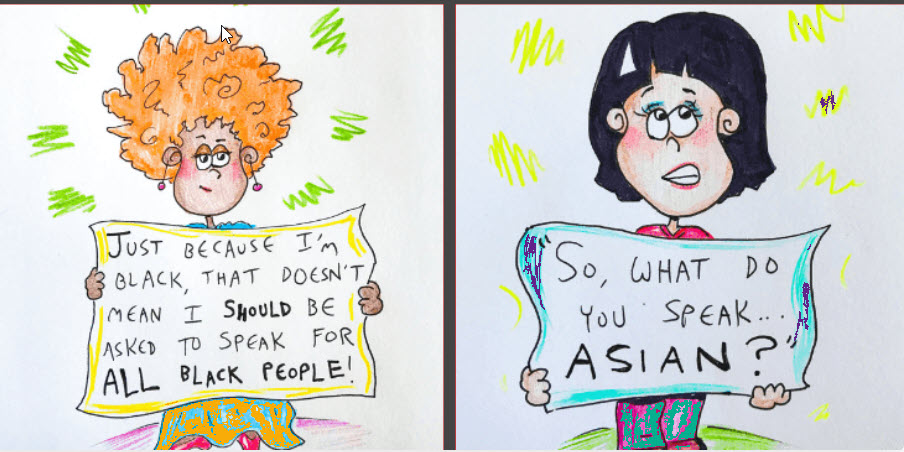
People hear the word microaggression and assume it means something minor. But the truth is, what seems subtle to one person can hit hard for someone else. These comments or actions often slide by unnoticed by the person saying them, but they land. And they build up.
If you’ve ever been told you’re overreacting, or that “it was just a joke,” or “you’re too sensitive,” you already know the pattern.
What are microaggressions, really?
They’re everyday comments, questions, or behaviors that expose a deeper bias. Usually, they’re not meant to hurt. But they still do. Because they reinforce stereotypes, signal exclusion, or casually remind someone that they don’t quite belong.
Some examples speak for themselves:
An Asian-American student gets told, “Wow, your English is so good,” even though they were born here.
A Black man steps into an elevator and notices a woman subtly clutch her purse.
A woman speaks up in a meeting, only to be interrupted or spoken over by male colleagues.
None of these moments are isolated. And none of them happen without context.
So how is this different from just being rude or awkward?
Microaggressions are tied directly to identity. They’re not just bad manners. They come from assumptions about race, gender, sexual orientation, language, ability, or religion. They reflect the parts of someone’s identity that are often marginalized or stereotyped — and they show up in the most casual settings.
Derald W. Sue, a psychologist who’s studied this deeply, defines them as the everyday slights, put-downs, and dismissals that marginalized people face constantly. The impact isn’t in the single moment. It’s in the repetition.
And here’s the thing — they’re often dressed up as compliments.
“You don’t look gay.”
“You’re so articulate.”
“I don’t see color.”
“You don’t act like other Black people.”
These are not compliments. They’re backhanded messages with bias baked in.
Where did the term come from?
The word microaggression was first used in the 1970s by Dr. Chester Pierce, a Harvard professor who used it to describe the constant racial slights Black people were exposed to. It came back into mainstream language around 2007 when Derald Sue expanded on the concept in the context of race, gender, and sexuality. Social media gave the term traction, especially among younger generations who were finally naming experiences older generations had been forced to normalize.
Why does it matter?
Because the damage is real. Research shows that microaggressions contribute to anxiety, depression, and even physical symptoms. They can make workplaces feel hostile, drain focus, and shut down participation. They’re not just annoying. They’re exhausting.
And just because someone doesn’t speak up in the moment doesn’t mean it didn’t affect them.
But isn’t this just being too sensitive?
That’s usually the defense. The person who said it feels accused, so they push back. But microaggressions don’t depend on intention. They depend on impact. You don’t get to decide how someone else feels about what you said. If you’ve never been in their shoes, you don’t get to measure their reaction.
What makes this conversation hard is that most microaggressions are unintentional. But that doesn’t mean they’re harmless. They still reinforce bias, and they still send a message — even if the sender didn’t mean to.
So what do you do about it?
It starts with listening. If someone tells you that what you said landed the wrong way, don’t argue. Don’t explain it away. Take the feedback. You don’t have to be perfect. But you do have to be open.
Derald Sue suggests five things that can help:
Pay attention to your biases. Everyone has them.
Spend time with people from backgrounds different from yours.
Don’t get defensive.
Listen when someone shares their perspective, even if it’s uncomfortable.
Speak up when you witness bias — even subtle forms of it.
This isn’t about shame. It’s about accountability.
If you’ve learned how to brush it off just to keep moving, that’s survival. But it was never your job to make it easier for them.
 Caronleid