
As someone who has been an informal caregiver for my mother for two decades, I often get asked about the signs of Alzheimer’s disease and how to differentiate them from the typical effects of aging. Alzheimer’s is a condition that affects millions of people worldwide, and it’s essential to recognize its symptoms early for effective management. Here, I’ll explain how to distinguish between normal aging and potential signs of dementia.
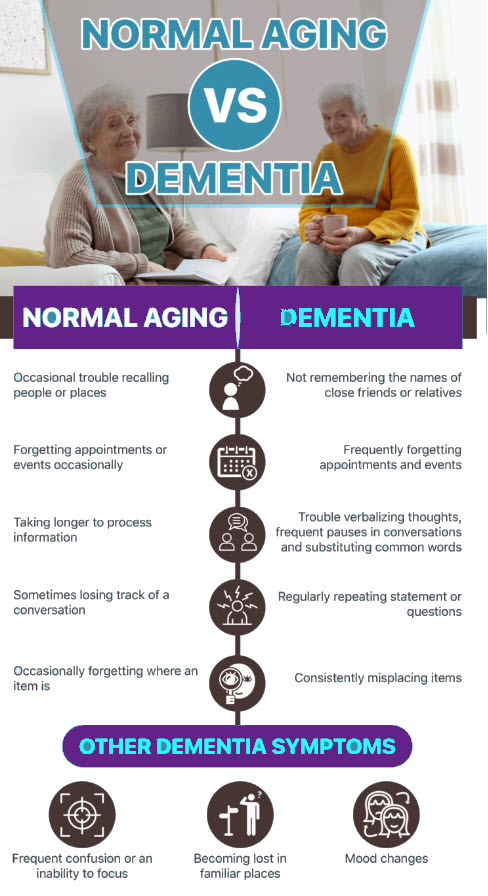
Normal Aging vs. Alzheimer’s Symptoms
Memory Loss:
- Normal Aging: It’s common to experience some minor memory lapses as we get older. For instance, you might occasionally forget where you placed your keys, but you can recall it later when you search. For example, last week, I couldn’t remember where I left my readers, but after retracing my steps, I found them on the dining room table.
- Alzheimer’s Symptoms: In Alzheimer’s, memory loss is more severe. You might forget recent conversations, important events, or even the names of close family members, and no matter how hard you try, those memories don’t return. For instance, my mother, who had Alzheimer’s, once forgot that I was her daughter and referred to me as a “nice lady.”
Attention and Multitasking:
- Normal Aging: Aging can slightly slow down your ability to process information and multitask, but it’s generally manageable. You might take a bit more time to switch between tasks. For instance, as I’ve gotten older, I’ve noticed that I need to concentrate more when handling multiple tasks simultaneously.
- Alzheimer’s Symptoms: Alzheimer’s can significantly affect attention and multitasking skills, making it challenging to handle even simple tasks simultaneously. You may find it nearly impossible to focus on more than one thing at a time. For example, my mom, struggled to remember how to make a cup of tea, a task she once did effortlessly.
Organization and Learning:
- Normal Aging: As you age, you might find it takes a bit longer to organize things or learn new skills, but with effort, it’s achievable. For example, you might need a bit more time to master a new computer program. I’ve experienced this as I’ve aged, especially when adapting to new technology.
- Alzheimer’s Symptoms: Alzheimer’s makes learning new things exceptionally difficult, and organization becomes a significant challenge. Tasks like managing finances or paying bills become overwhelming, and even familiar routines can become confusing. My mother, couldn’t remember how to follow her favorite recipe, despite having made it countless times.
Repetition and Forgetfulness:
- Normal Aging: Occasional repetition or forgetfulness about minor details is common with aging but doesn’t significantly impact daily life. For instance, you might tell the same anecdote twice without realizing it. I’ve noticed that I sometimes repeat stories to my grandchildren without noticing.
- Alzheimer’s Symptoms: Alzheimer’s often leads to frequent repetition and forgetfulness of essential information, causing frustration and confusion for both the individual and their loved ones. You might ask the same question repeatedly within a short span. My mom, would ask the same question within minutes during our conversations.
Struggling with Daily Life:
- Normal Aging: Typical aging might introduce small inconveniences, but it doesn’t hinder your ability to perform daily tasks. You might occasionally misplace your glasses but quickly find them. Recently, I misplaced my car keys, but after a few minutes of searching, I located them in my coat pocket.
- Alzheimer’s Symptoms: In Alzheimer’s, symptoms become so pronounced that they interfere significantly with everyday life. This includes difficulties in having coherent conversations, locating familiar places, and managing basic activities. You might forget how to perform routine tasks, like preparing a meal or dressing appropriately. My mom once got lost in their neighborhood while taking a walk, and he couldn’t find her way back home.
Recognizing Unconscious Bias and Seeking Help
It’s important to note that the above distinctions are not definitive, and individual experiences may vary. However, if you or a loved one are concerned about memory loss or other cognitive changes, it’s crucial to seek professional advice. Don’t hesitate to consult a healthcare provider, as there are various potential causes for these symptoms, and early diagnosis can make a significant difference.
As someone who has journeyed alongside a loved one with Alzheimer’s, I understand the importance of timely intervention and support. Seeking help when needed is a courageous step towards ensuring the best possible quality of life for those affected by Alzheimer’s and other cognitive conditions.
Remember, it’s always better to know and seek help if you’re worried about cognitive changes, as there are many resources and strategies available to support individuals and their families on this challenging journey.
 Caronleid