
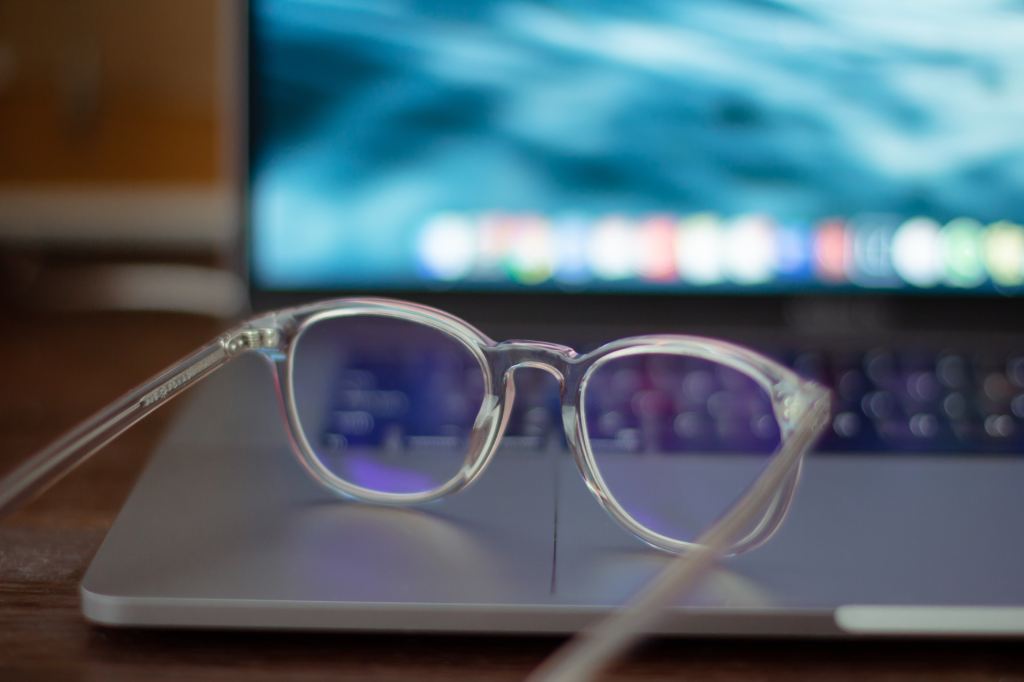
So, funny story, I lost my blue light blocking glasses. You know, the ones that don’t even have a prescription. How does one lose glasses in their own house? Anyway, after my solo search party decided to call it quits, I hopped onto Amazon… and was immediately overwhelmed by the choices. Then, I stumbled upon a review that claimed blue light blockers have no medical backing. That piqued my interest. I found myself tumbling down a rabbit hole of “Is this true?” and “Have I been tricked into thinking my blue light blockers are some sort of magical shield for my eyes?” Well, it turns out… they might not be. So, Amazon, you’re not getting my money today. This got me thinking, what else am I being fooled by?
Well?
The short answer is – maybe, if you get a good pair. If you’re just looking to block blue light and don’t suffer from migraines or extreme light sensitivity, then a quality pair of blue light glasses might help. However, be careful where you buy them, as many brands don’t block much blue light at all.
What Is Blue Light and Is It Harmful?
The sun is a natural source of blue light. Artificial sources include fluorescent lighting, LED lighting, and digital devices like computers and smartphones. Blue light has the highest energy of any wavelength on the visible spectrum, which means it could potentially impact your eye health more than other types of visible light.
However, studies into the potential harm caused by blue light haven’t been too conclusive. Research is ongoing, but there have been mixed results thus far.
The Experts Weigh In on Blue Light
The American Academy of Ophthalmology recognizes digital eye strain, but it doesn’t assert that blue light causes eye damage or adversely affects eye health. In fact, they do not recommend blue light-blocking glasses due to the lack of scientific evidence that blue light is damaging to the eyes.
The Bigger Issue of Eye Strain
If you’ve felt like your eyes were bugging you after hours in front of a computer or other screen, you may have experienced digital eye strain. While blue light gets a lot of the blame, there are other factors that contribute significantly to digital eye strain.
1. Prolonged Screen Time
The average person spends over 7 hours a day staring at a screen. That’s a lot of time for your eyes to be focused on a single, close-up point. Over time, this can cause your eyes to become fatigued, leading to symptoms of eye strain.
2. Poor Posture
Ever catch yourself hunching over your computer or craning your neck to look at your phone? Poor posture doesn’t just affect your back and neck—it can also contribute to eye strain. When you’re in an awkward position, you might squint or strain your eyes more than necessary to see the screen.
3. Inadequate Lighting
Working in a room that’s too dim or too bright can cause eye strain. Your screen should not be the main source of light in the room, nor should it be completely washed out by sunlight or overhead lights.
4. Lack of Breaks
Staring at a screen for hours on end without taking breaks can tire out your eyes. It’s important to follow the 20-20-20 rule: every 20 minutes, look at something 20 feet away for 20 seconds. This gives your eyes a chance to rest and refocus.
5. Dehydration
Not drinking enough water can lead to dry eyes, a common symptom of eye strain. Make sure you’re staying hydrated, especially if you’re spending a lot of time in a dry, air-conditioned or heated environment.
So, while blue light glasses might help a bit, they’re not a magic bullet. It’s important to address these other factors if you want to reduce eye strain. Remember, your eyes need rest, just like the rest of your body!
References:
References
Zhao Z.-C., Zhou Y., Tan G., Li J. Research progress about the effect and prevention of blue light on eyes. Int. J. Ophthalmol. 2018;11:1999–2003. doi: 10.18240/ijo.2018.12.20. PMC free article> PubMed> CrossRef> Google Scholar>
S. Singh, L.E. Downie, A.J. Anderson. Do Blue Blocking Lenses Reduce Eye Strain From Extended Screen Time? A Double-Masked, Randomized Controlled Trial. American Journal of Ophthalmology. February 11, 2021
Vimont, C., & Hazanchuk, V. (2021, March 10). Should You Be Worried About Blue Light? American Academy of Ophthalmology. https://www.aao.org/eye-health/tips-prevention/should-you-be-worried-about-blue-light
Tsz Wing Leung, Roger Wing-hong Li, Chea-su Kee. PLoS One. 2017; 12(1): e0169114. Published online 2017 Jan 3. doi: 10.1371/journal.pone.0169114. PMCID: PMC5207664
Knufinke M, Fittkau-Koch L, Møst EIS, Kompier MAJ, Nieuwenhuys A. Restricting short-wavelength light in the evening to improve sleep in recreational athletes – A pilot study. Eur J Sport Sci. 2019;19(6):728-735. doi:10.1080/17461391.2018.1544278
Niwano Y, Iwasawa A, Tsubota K, Ayaki M, Negishi K. Protective effects of blue light-blocking shades on phototoxicity in human ocular surface cells. BMJ Open Ophthalmology. 2019;4(1):e000217. doi:10.1136/bmjophth-2018-000217
Wang Y, Zhang M, Sun Y, et al. Role of short-wavelength blue light in the formation of cataracts and the expression of caspase-1, caspase-11, Gasdermin D in rat lens epithelial cells: insights into a novel pathogenic mmechanism of cataracts. BMC Ophthalmol. 2020;20:289. doi:10.1186/s12886-020-01565-z
West KE, Jablonski MR, Warfield B, et al. Blue light from light-emitting diodes elicits a dose-dependent suppression of melatonin in humans. Journal of Applied Physiology. 2011;110(3):619-626. doi:10.1152/japplphysiol.01413.2009
Henriksen TEG, Grønli J, Assmus J, et al. Blue-blocking glasses as additive treatment for mania: Effects on actigraphy-derived sleep parameters. J Sleep Res. 2020;29(5):e12984. doi:10.1111/jsr.12984
 Caronleid