
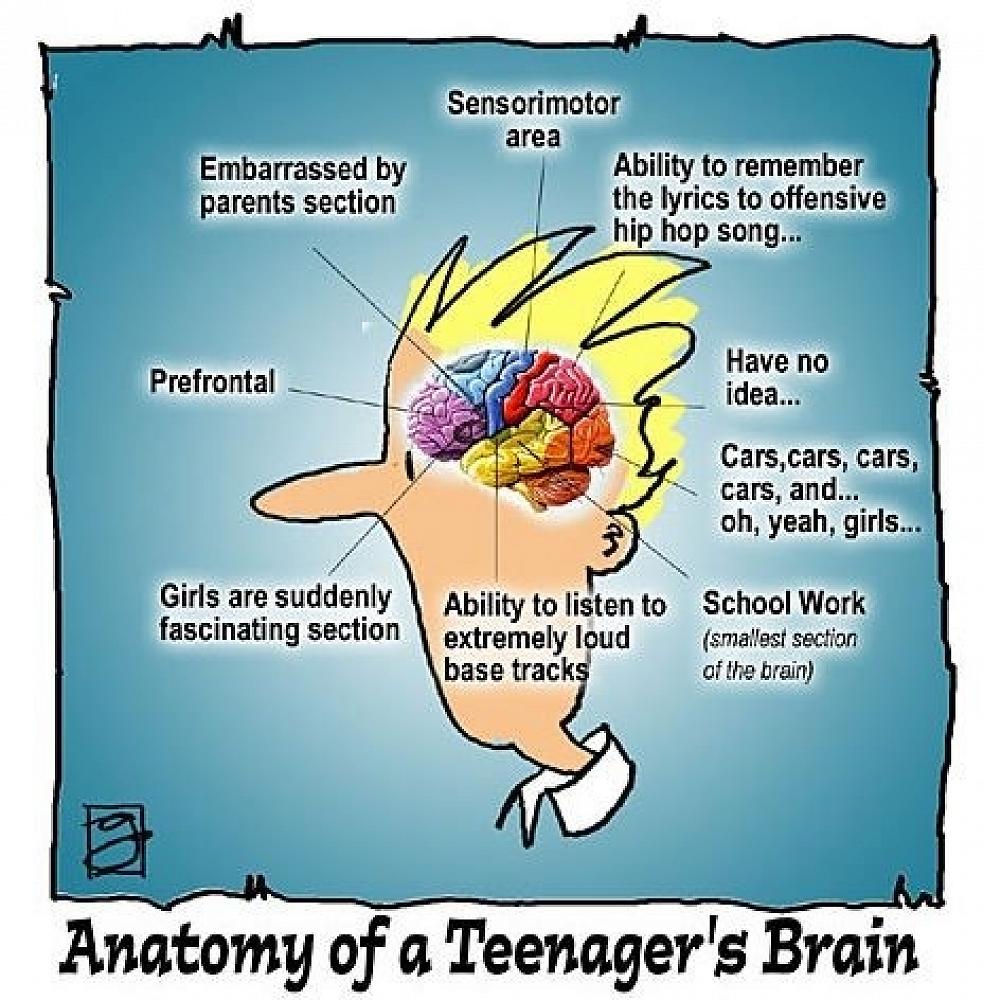
The teenage years are a time of rapid physical, emotional, and cognitive development. During this period, the adolescent brain undergoes significant changes that can impact behavior and decision-making. As a therapist, it is important to understand these changes in order to help adolescents navigate the challenges of adolescence and develop healthy coping strategies.
This could look like: a 14-year-old getting caught shoplifting something small, like lip gloss or a keychain. When confronted, they seem indifferent or brush it off. From a developmental standpoint, this isn’t about poor morals—it’s about an underdeveloped ability to pause, weigh outcomes, and resist peer pressure in the moment.
One of the key changes that occurs during adolescence is the development of the prefrontal cortex. This is the part of the brain responsible for planning, decision-making, and impulse control. According to a study published in the Journal of Adolescent Health, the prefrontal cortex does not fully develop until the mid-20s. This means that adolescents may struggle with impulse control and decision-making, and may be more likely to engage in risky behaviors.
What this means is: a 16-year-old may text while driving, even after acknowledging the danger in past conversations. The immediate pull of the notification, coupled with the presence of friends, overrides the logic that might guide them on their own.
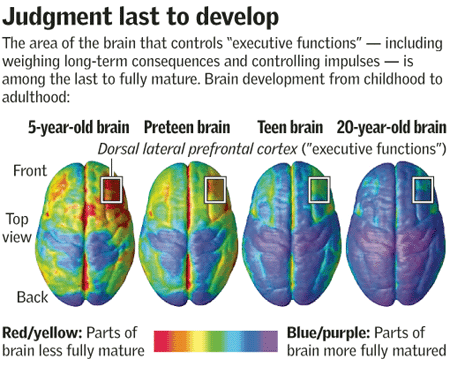
The prefrontal cortex is a region of the brain that is responsible for a range of executive functions, including planning, decision-making, impulse control, and working memory. During adolescence, the prefrontal cortex undergoes significant development, with synaptic pruning and myelination occurring throughout this period. However, the prefrontal cortex does not fully mature until the mid-20s, and as a result, adolescents may struggle with certain aspects of executive function.
Here’s how that shows up: a student might forget multiple assignments, misplace belongings, or seem disorganized. While it may come off as carelessness, it’s often an executive functioning delay—not a lack of motivation.
The prefrontal cortex plays a critical role in regulating emotional responses, and in particular, in inhibiting negative emotions and regulating emotional reactivity. According to a study published in the journal Developmental Cognitive Neuroscience, the prefrontal cortex is still developing in adolescence, and this can lead to difficulties in regulating emotions.
You might see this play out when: a 15-year-old erupts in rage during a classroom disagreement and later admits, “I don’t know what came over me.” They likely aren’t being intentionally disruptive—their brain simply flooded, and the “brakes” weren’t strong enough to kick in.

During adolescence, the limbic system, which is responsible for processing emotions, is also highly active. This can lead to heightened emotional reactivity, which can make adolescents more susceptible to stress and anxiety, and can impact their ability to regulate their emotions. Adolescents may be more likely to experience intense emotional responses to situations that would not elicit the same response in adults, and may struggle to manage their emotions effectively.
To put it into perspective: a teen may spend days in distress after being left out of a group chat. While an adult might shrug this off, the teen’s brain interprets the exclusion as a major social threat, triggering emotional dysregulation and low self-worth.
One consequence of this is that adolescents may be more likely to engage in impulsive behaviors, as they may be less able to inhibit their emotional responses and think through the consequences of their actions. This can include behaviors such as substance use, risky sexual behavior, and delinquency.
This could look like: a teen drinking too much at a party shortly after a breakup. They may not have a pattern of substance use, but in that moment, they’re overwhelmed and looking for an escape. Without strong emotional regulation skills, they act on impulse and emotion.
As a therapist, it is important to help adolescents develop effective emotional regulation strategies. This may involve teaching them mindfulness and stress reduction techniques, as well as helping them to identify triggers and develop coping strategies for managing their emotions. It may also involve working with parents and caregivers to help them understand the challenges that adolescents face in regulating their emotions, and to provide support and guidance in developing effective coping strategies.
Here’s how that shows up in session: A teen begins learning to recognize physical cues—tight shoulders, racing heart—before their anger peaks. With practice, they learn to take a pause, breathe, or even request space before reacting.
Overall, the developing prefrontal cortex in adolescence can have a significant impact on emotional regulation and behavior. By understanding the changes that are occurring in the adolescent brain, therapists can provide effective treatment and support for adolescents as they navigate the challenges of this period of development.
In addition to these changes, adolescence is also a time of increased social and peer influence. According to a study published in the journal Developmental Review, peer influence can have a significant impact on adolescent behavior. Adolescents are more likely to engage in risky behaviors when they are with their peers, and are also more likely to conform to peer norms and expectations.
What this means in real life: a typically reserved 15-year-old may go along with vaping or shoplifting in a group, despite previously saying they never would. The desire for social belonging activates reward centers in their brain, often silencing better judgment in the moment.
Effective emotional regulation strategies can help adolescents manage their emotions and reduce the likelihood of engaging in impulsive behaviors. Some of the most effective strategies for emotional regulation in adolescents include:
Mindfulness: Mindfulness techniques involve focusing attention on the present moment and accepting one’s emotions without judgment. This can help adolescents develop greater awareness of their emotional states and increase their ability to regulate their emotions.
You might see this used when: a 17-year-old with performance anxiety uses a brief breath-focused grounding practice before walking into an exam room. Over time, they begin to feel more in control—even if the anxiety still shows up.
Cognitive restructuring: Cognitive restructuring involves identifying negative thought patterns and replacing them with more positive and adaptive ways of thinking. This can help adolescents shift their focus away from negative emotions and develop more positive coping strategies.
This could look like: a 14-year-old who says, “I’m a failure because I didn’t make the team,” learns to question that thought and replace it with, “I didn’t make it this time, but I’ve improved and can try again.” That shift doesn’t erase the disappointment—it gives it a softer place to land.
Steps involved in cognitive restructuring:
Identify negative thought patterns: For example, “Nobody likes me,” or “I’m not good at anything.”
Challenge negative thoughts: “Is that 100% true? What evidence do I have for and against this belief?”
Replace negative thoughts with positive thoughts: “I have friends who support me,” or “I’ve succeeded in hard things before.”
Here’s how that shows up: A teen starts tracking their self-talk in a journal and begins to notice patterns. With support, they gradually learn to reframe and self-soothe in moments of shame or fear.
Relaxation techniques: Relaxation techniques such as deep breathing, progressive muscle relaxation, and visualization can help adolescents reduce stress and anxiety and promote emotional regulation.
What this might look like: A teen who struggles with test anxiety imagines a calm place—a beach, forest, or safe room—before an exam. Practicing this visualization daily helps bring their stress response down during high-stakes moments.
Exercise: Exercise has been shown to be effective in reducing stress and anxiety and promoting emotional regulation. Encouraging adolescents to engage in regular physical activity can be an effective strategy for promoting emotional well-being.
This could look like: a teen choosing to run or bike after a conflict with a sibling, using movement as a tool to process anger or sadness. Over time, they begin to notice how physical activity regulates their mood.
Social support: Having a strong support system can help adolescents cope with stress and regulate their emotions. Encouraging adolescents to seek out social support from family, friends, or a therapist can be an effective strategy for promoting emotional regulation.
Here’s a common scenario: A teen who feels misunderstood by peers connects regularly with an older cousin or mentor who listens without judgment. That relationship becomes a steadying influence, especially during emotionally turbulent periods.
It is important to note that different strategies may be more effective for different individuals, and it may take some trial and error to find the strategies that work best for a particular adolescent. As a therapist, it is important to work collaboratively with the adolescent to identify effective emotional regulation strategies and support them in implementing these strategies in their daily life.
One approach is to help adolescents develop healthy coping strategies, such as mindfulness and stress reduction techniques, that can help them regulate their emotions and make better decisions. It is also important to help adolescents develop a strong sense of self and identity, so that they are better able to resist peer pressure and make decisions that are in their best interest.
What this means day-to-day: A teen who journals about their values and goals begins to make different choices—not because someone told them to, but because they’ve connected with who they want to become.
Another approach is to work with parents and caregivers to help them understand the changes that are occurring in the adolescent brain. This can include providing education on the importance of setting boundaries and limits, as well as strategies for communicating effectively with adolescents.
You might see this when: a parent learns to pause before reacting to a teen’s sarcasm and instead says, “I can see you’re upset. I’m here when you’re ready to talk.” That change in tone can open a door that would’ve stayed shut.
In conclusion, adolescence is a time of significant change in the developing brain, which can impact behaviour and decision-making. As a therapist, it is important to understand these changes in order to provide effective treatment and support for adolescents. By helping adolescents develop healthy coping strategies and a strong sense of self, and by working with parents and caregivers to set boundaries and communicate effectively, therapists can help adolescents navigate the challenges of adolescence and develop into healthy, well-adjusted adults.ense of self, and by working with parents and caregivers to set boundaries and communicate effectively, therapists can help adolescents navigate the challenges of adolescence and develop into healthy, well-adjusted adults.
References:
Casey, B. J., Jones, R. M., & Hare, T. A. (2008). The adolescent brain. Annals of the New York Academy of Sciences, 1124(1), 111-126.
Crone, E. A., & Dahl, R. E. (2012). Understanding adolescence as a period of social–affective engagement and goal flexibility. Nature Reviews Neuroscience, 13(9), 636-650.
Luna, B., & Wright, C. L. (2016). Adolescent brain development: Implications for understanding risk and resilience processes through neuroimaging research. Journal of Adolescent Health, 59(4), 357-363.
Steinberg, L. (2010). A dual systems model of adolescent risk-taking. Developmental Psychobiology, 52(3), 216-224.
Van den Bos, W., Crone, E. A., & Güroğlu, B. (2018). Brain function during social interaction. Developmental Cognitive Neuroscience, 30, 8-16.
 Caronleid